Five stages, four decision gates
Each stage answers one question and produces something a leadership team can decide on. Nothing moves forward without passing its gate, so the programme can stop cheaply at any point.
Twenty years in product, most recently spent on how AI agents can be built safely into the way companies operate: what is worth automating, how it is tested against real data, and which safeguards let it run unattended.
Each stage answers one question and produces something a leadership team can decide on. Nothing moves forward without passing its gate, so the programme can stop cheaply at any point.
Two different questions that tend to get answered as one. Where it runs decides who can see the data. What it may touch decides what the system is allowed near.
Capability and risk rise together, on the same dial. The job is to turn it one step at a time, on the strength of the evidence.
Is this safe to run unattended? Tick the properties a piece of work would have.
A weighted scorecard picks the first workflow and holds the rest for a later wave. The scores are from the financial services example on the method page.
multi-agent product build
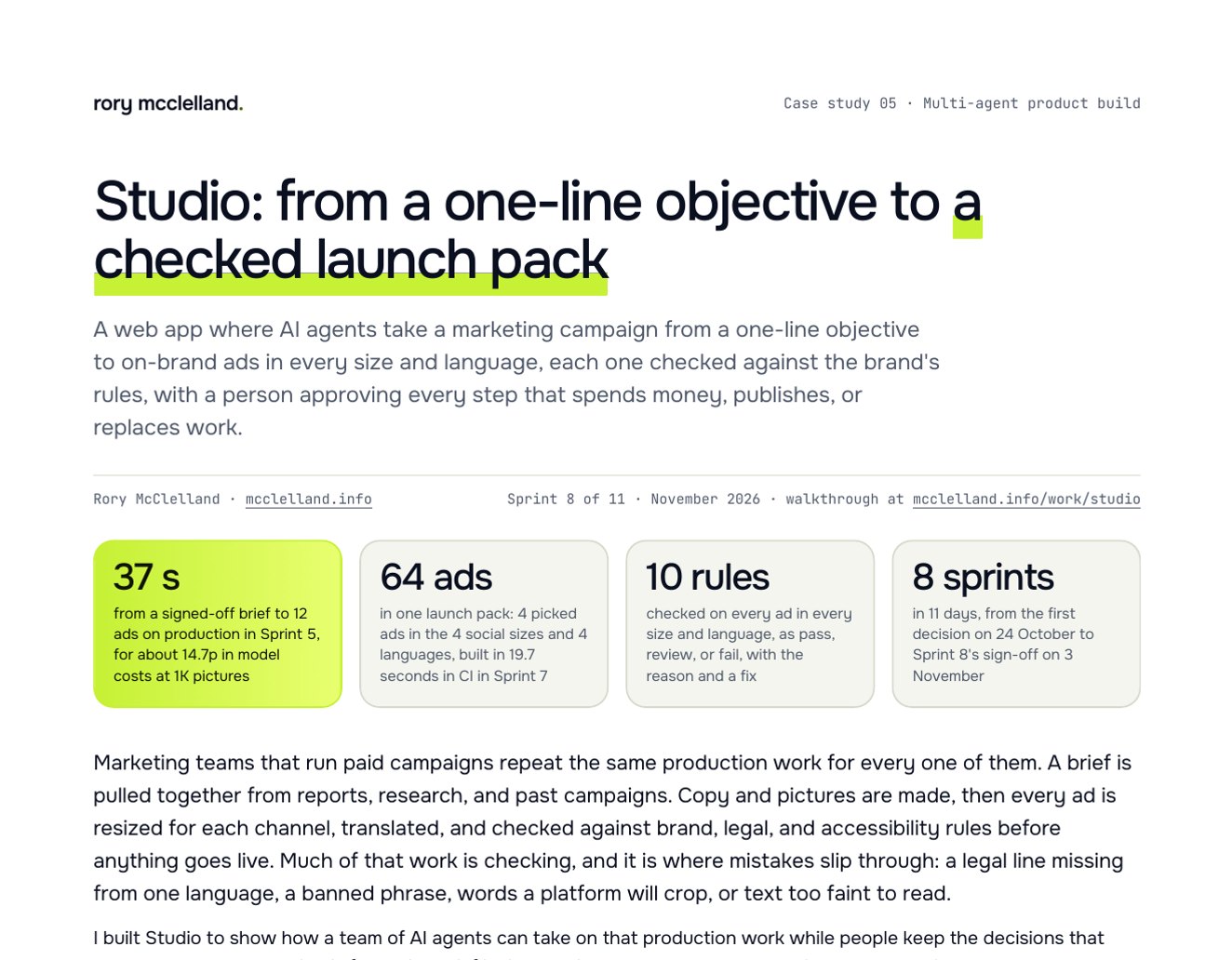
AI agents take a marketing campaign to on-brand ads in every size and language, checked against the brand’s rules, with a real person approving every consequential step.
AI product build
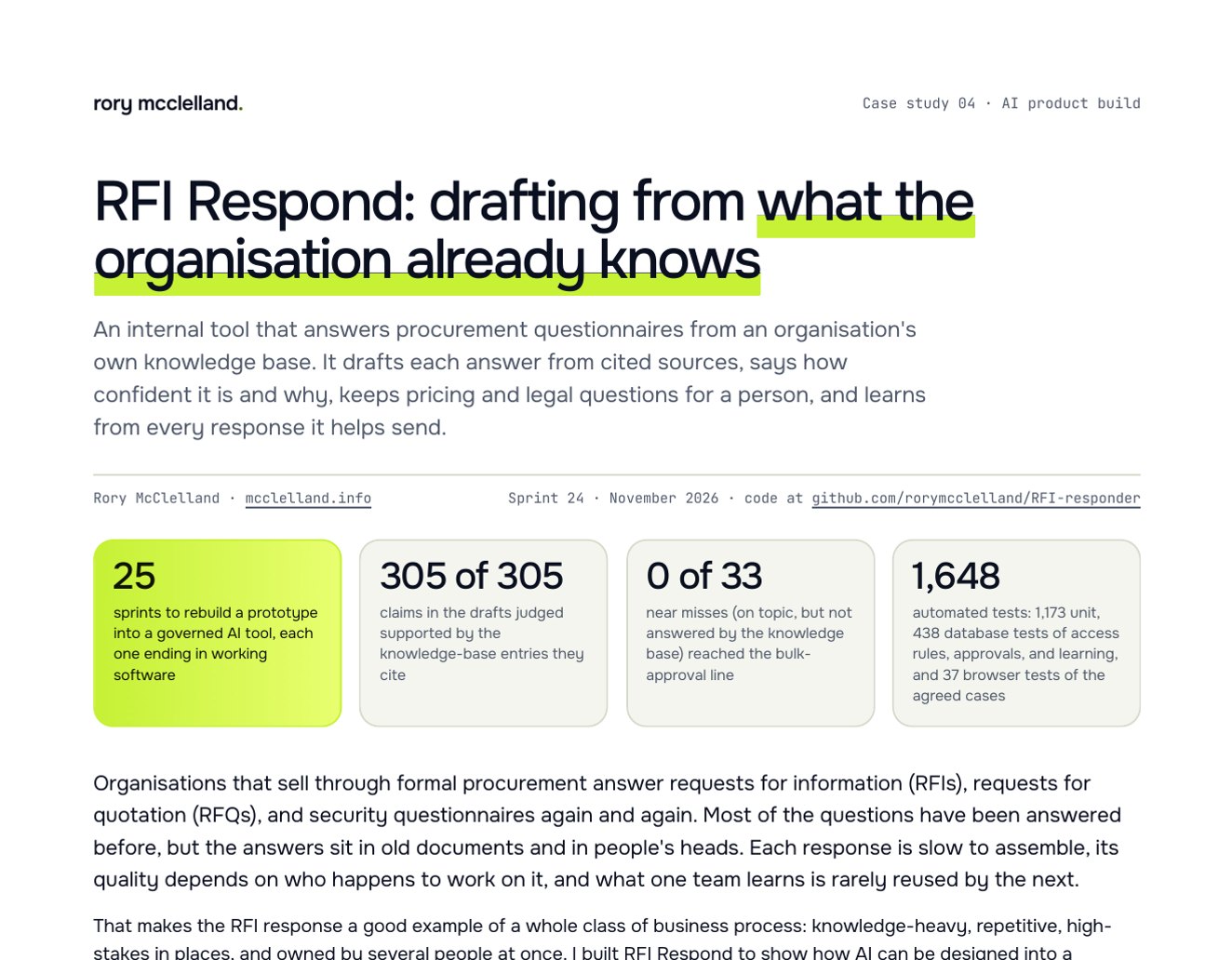
AI designed into a knowledge-heavy business process to make it faster, more accurate, and more repeatable, with every figure backed by an evaluation.
What a person can see of the business tends to decide the goals they are able to write. AI makes that matter more, because building is no longer the slow part.
ai in organisationsMulti-agent systems can spend around half their compute on agents talking to each other. Research published this year suggests much of that buys nothing, and the same is true of the organisations the agents were modelled on.
guardrailsNvidia’s new agent safety platform puts the guard outside the agent. It is the right instinct, and you do not need a data centre to apply it.
The best way to get in touch is by email. I'm always happy to talk through a specific workflow, a rollout that's stalled somewhere along the way, or a question a security team has been asked with no deadline attached to it. I read and reply to email myself, usually within a day.