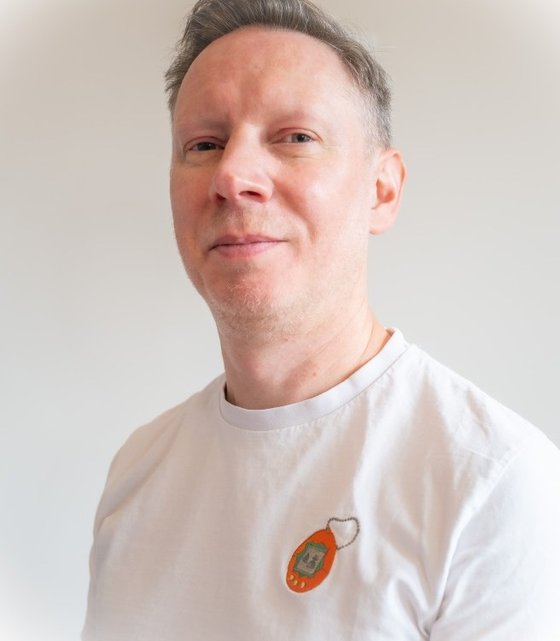
Redesigning how organisations work, not decorating the old way with new tools.
I have spent twenty years running product organisations end to end, and most recently I have been helping companies work out how AI agents (software that can act on its own, as well as answer questions) can be built safely into the way they operate. In practice, that means working out what is worth automating, testing it against real data instead of a tidy demo, and putting the safeguards in place that let it run unattended, without anyone having to hold their breath.
I have spent twenty years running product organisations, and more recently I have been building working prototypes with AI coding tools, alongside the engineers who build production systems. That combination is the point. I am as comfortable talking an executive team through a new operating model as I am sitting with an engineer to work out why an AI agent has started giving the wrong answer (often because it has been asked to hold too much in its head at once, which is known, a little grandly, as its 'context window' filling up).
I have restructured two companies around a new way of working. IPOINT moved from a services-led business to a product-led one, and Soho House's member platform was rebuilt from a booking tool into a content-led product, with full P&L ownership throughout. The method is much the same each time: prototype the workflow, test it with real users, and then build the governance underneath it, so that other people can keep building safely after I have gone.
Before product came engineering: an MSc in Computer Science and a BEng in Electronic & Computer Engineering, both from the University of Birmingham. Before that, I spent three years teaching in elementary and junior high schools in rural Japan, including special needs classes, which is where my interest in working across languages, regulations and very different management cultures began.
I have restructured two companies' operating models end to end, with full ownership of the redesign in both cases.
I have designed and built two working prototypes with AI coding tools: one drafts answers to requests for information (RFIs) from a library of approved responses, and the other decides when a conversation needs a meeting.
Full P&L ownership of product launches from $2M to $55M, and of cross-functional teams of up to twenty people.
Experience spans financial services, travel, retail, hospitality, dating and consumer privacy. The constraints change from one to the next; the discipline needed to introduce AI into a business responsibly doesn't.
02 · How I help
Four pieces of work, usually taken in order.
Each piece of work stands on its own and can be commissioned separately. Taken together, they trace the route from a handful of people using an AI assistant well to AI being part of how the company runs, day to day.
01 · MAP & RANK
Find the right first workflow
Two to three weeks are spent breaking the organisation's work into its parts: the purpose behind it, the decisions involved, the information it needs, how it is carried out and what tends to go wrong. The candidates are then ranked against evidence, instead of against whoever is most enthusiastic about them. The result is one chosen piece of work, a baseline to measure progress against, and a short written case for why it goes first.
02 · PROVE
Build the pilot that settles the argument
Over four to six weeks, a working pilot is built on your own data, in your own environment. It is then tested against examples nobody on the team has seen before, to check that the system has learned the task and has not simply memorised the answers. It ends with a working system and a clear recommendation on whether to proceed.
03 · OPERATIONALISE
Make it safe to run unattended
Autonomy is handed over gradually. Each AI agent gets its own restricted identity, so it can only touch what it needs to (much as a new employee gets limited system access on their first day), and its work is checked against a proper set of test cases before it is trusted with more. This stage also designs for the one risk that more secure hosting cannot fix: that something an agent reads, such as an email, a document or a web page, steers what it does next. Every workflow that comes out of this stage has a named owner and a written statement of the remaining risk, which somebody has read and signed.
04 · SCALE
Make the next one cheaper
The groundwork for the first workflow (how information is gathered and fed in, how the parts of the system talk to one another, how it is evaluated and how it is kept under control) is turned into something reusable: a platform the rest of the organisation can build on. The effect compounds, so by the time a fourth workflow comes along, it tends to cost a fraction of the first.
03 · The method
Redesigning a business around AI
Most organisations arrive at AI in much the same way. A few people start using an assistant on their own initiative, one or two get rather good at it, and licences are bought more widely. A dashboard shows adoption climbing, and everyone takes some comfort from that. Eighteen months later, the company works exactly as it always did, because the work itself never changed, only the tool people used to do it. What follows is a method for changing the work.
Adopting AI tools changes what people use. Redesigning the work around AI changes what a company can do, and that is the part that shows up in the numbers.
See it through an industry lens: this changes the examples below
The engine: five stages, four decision gates. Keep scrolling; the page pins and moves sideways with you.
Scroll ↓
01
Map
Where could this help, and what's it worth?
Produces
A longlist of candidate workflows, each with a baseline and a rough value.
Gate
Is there anything here worth a pilot?
In practice: financial services
02
Rank
What do we do first, and why that?
Produces
A scored shortlist, one chosen workflow, a locked baseline.
Gate
Do we fund the pilot?
In practice: financial services
03
Prove
Does it work on our data, in our environment?
Produces
A working system on a contained slice, measured against the baseline, plus a named reusable core.
Gate
Go / no-go to production.
In practice: financial services
04
Operationalise
Can it run in production, safely, without us watching?
Produces
A production workflow with an owner, authority, evaluation, monitoring and an off switch.
Gate
Do we extend to the next domain?
In practice: financial services
05
Scale
How does the next one get cheaper?
Produces
A reused foundation, a growing component library, internal teams building on it.
Gate
Ongoing, reviewed on value delivered, never on time elapsed.
In practice: financial services
The practice: while the engine rebuilds workflows, this changes how people work day to day
L1 · Assisted
The starting line
Here, the AI produces a first draft and the person edits it, so it becomes less a blank page and more a thinking partner to argue with. Everyone in the organisation should reach a confident L1 fairly quickly.
L2 · Delegated
Where most people should live
Whole tasks are handed over and reviewed afterwards, from within a saved workspace that already has the right context loaded into it. It's here that most of the model's mistakes tend to get caught.
L3 · Orchestrated
Power users, function champions
At this level, people design multi-step workflows that run with proper checkpoints built in, build reusable components that others go on to use, and mentor those still working their way up from L1.
How autonomy is earned: four stages every workflow passes through before it acts unattended. Keep scrolling; this panel pins and moves with you too.
Scroll ↓
01
Shadow
Watch
At this stage, the system runs in the background on live data, but nobody acts on what it produces yet. Its job is to show that it behaves as people would have. It moves on once its agreement with human judgement has settled, and any disagreements have been understood, not just explained away.
Capability unlocked
Risk if unmanaged
02
Assisted
Recommend
A recommendation is now produced, with the evidence behind it, but a person still makes the decision. It moves on once people rarely need to correct it, that rate is still falling and, just as importantly, the people using it every day trust it.
Capability unlocked
Risk if unmanaged
03
Delegated, within bounds
Act, bounded
The system now acts on its own, but only within defined limits: value limits, particular case types, and confidence thresholds below which it will not proceed. Anything outside those limits goes to a person instead of being guessed at. It passes this stage once exception handling is proven and the escalation route has held up under real load, not only in a test environment.
Capability unlocked
Risk if unmanaged
04
Extended authority
Widen on evidence
From here, the limits are widened gradually, as evidence builds that it is safe to do so. They are reviewed against measured performance throughout, never simply because time has passed since the last review.
Capability unlocked
Risk if unmanaged
One finding is worth pausing on: capability and risk rise together, on the same dial. The job is therefore to turn that dial deliberately, one step at a time, on the strength of the evidence, instead of trying to reduce the risk to zero.
Where deployment and exposure meet
Two quite different questions tend to get asked together, and answered as if they were the same. Where does it run decides who can see the data, and what it all costs. What may it touch decides what the system is allowed near in the first place. Once the two are separated and set against each other, the right deployment option for a piece of work tends to become clear, and it is rarely the same answer twice. Click a cell to see why.
In-suite AI
Enterprise assistant
Own agents, vendor API
Own agents, own tenant
Open-weight, self-hosted
Public / low-sensitivity
Proceed
Proceed
Proceed
Proceed
Proceed
General internal
Proceed
Proceed
Proceed
Proceed
Conditional
Confidential business
Conditional
Conditional
Proceed
Proceed
Avoid
Employee personal data
Avoid
Conditional
Conditional
Proceed
Avoid
Customer personal data
Avoid
Avoid
Avoid
Conditional
Avoid
ProceedConditional: check terms, counsel or scope firstAvoid, or belongs to a different decision
Click a cell above to see the guidance behind it.
Moving right along this table only changes who can see the data and what it all costs. It changes nothing about who could steer the model through something it reads, what it is allowed to do, or who is accountable when it gets something wrong. Those are decisions about architecture and management, not hosting, and they are what the next diagram is about.
Is this safe to run unattended? Try classifying one.
It is worth being clear about one thing: a language model cannot reliably tell a real instruction from its user apart from one hidden in something it is reading, such as a stray line of text on a web page or an email dressed up as something else. The major AI labs say so themselves, and none of them describe it as solved. Where the model runs changes who can see the data and what it all costs. It changes nothing about this risk.
What works is containment, sometimes called the Rule of Two. An AI session can reasonably run unattended if it has no more than two of three properties: access to private data, exposure to content it did not write, and the ability to act or communicate with the outside world. Give it all three at once, unsupervised, and you have built exactly the thing a security team loses sleep over.
Low exposure
No meaningful exposure from this combination, so not the interesting case. Tick a box above.
In practice: financial services
Three architectural commitments
01
A deterministic core, with models kept to the edges. Language models are used to interpret, draft and triage. Calculations, transactions and records of decisions are kept in deterministic code, which behaves the same way every time and so can be replayed and audited. That is what makes a system built partly on unpredictable AI explainable to a risk function, when the question is asked (and it always is).
02
Decisions become precedent. Every approved judgement is saved as a reusable precedent, so the system becomes more capable through use, as well as through further development.
03
No vendor becomes the system of record. Context, skills, evaluation sets and traces are all kept in formats the organisation owns. The choice of model therefore stays a decision that can be revisited for each workflow, on the evidence, instead of being locked in from the start.
Four of the beliefs underneath it
Value over hype
What matters is hours given back, lead times cut and error rates reduced. Seats issued and prompts run measure activity, not value. If the value cannot be named and shown against a proper baseline, the work has not been done yet.
Working software beats slideware
A prototype that runs on the organisation's own data, built in weeks, tends to settle debates that a hundred slides never could, not least because it is put in front of the people who will have to live with the result.
Start small, earn the right to scale
The destination is described; only the next step is committed to. Each phase is a real decision gate, and the first one is kept cheap enough that stopping there would cost almost nothing.
Augment judgement, don't replace it
AI does the assembly work and the first pass; the decisions with real consequences are still made by people. For that reason, confidence thresholds and escalation routes are designed in from day one, instead of being added after something has gone wrong.
"Where a model runs decides who can see the data and what it all costs. How the system is designed decides what can go wrong, and that is the part that gets my attention."The sentence I ask a board to remember
04 · Experience
Twenty years, six operating environments.
2026
Principal Product Manager
Elsewhen, London · contract
Product strategy for enterprise AI platforms across financial services, travel and retail, from discovery through to production pilots. Designed and ran the four-week pilot model: map the workflow, prototype with real users, measure before scaling. Led discovery and a four-week production pilot for a luxury travel company: an AI agent that cut quote preparation from over two hours to under two minutes, with 100% accuracy.
2025
Product Director
IPOINT Systems, Berlin
Go-to-market for a new AI-enabled B2B SaaS platform unifying compliance and sustainability reporting, reporting to the CPO. Redesigned the product organisation and shifted the company from a services-led delivery model to a product-led one, building the pricing model to support it.
2022–2024
Director, Soho Connect
Soho House & Co, London
Full P&L ownership of a new-to-market digital product; rebuilt the member app from a transactional booking utility into a content-led platform. Owned four functions end to end (Product, Design & UX, Data and Platform) and authored the six-year plan the business adopted as its roadmap (revenue $2M → $55M, members 29k → 328k).
2021–2022
Product Director, Safety & Integrity
Bumble, Taipei · contract
Built product safety strategy across Bumble and Badoo, translating policy intent into a concrete product and team structure, and aligned executive sponsors across London and Barcelona.
2018–2021
Product Lead, Chrome Privacy
Google, Munich
Owned Incognito Mode, browsing-data controls and Chrome's privacy settings architecture: the privacy and permissions gate every other feature had to clear before shipping, working closely with Legal, PR and Product Marketing.
2016–2018
Head of Product Management
Babbel, Berlin
Built and led a team of four product managers across web, iOS and Android; led Babbel's shift from a single consumer app into a multi-product, B2B platform business.
Earlier: Engineering Manager, then Product Manager, North Plains Systems, London (2007–2016). Assistant language teacher in elementary and junior high schools, JET Programme, Shiga, Japan (2001–2004). Education: MSc Computer Science (Distinction) and BEng Electronic & Computer Engineering, University of Birmingham. Pragmatic Product Marketing; PRINCE2 Practitioner.
05 · Featured builds
Two prototypes I designed and built with AI tools.
Both were designed from the ground up and built with an AI coding tool: I wrote the requirements, and the tool wrote the code.
Designed from 65 job stories · built with an AI coding tool
RFI Response Tool
Questionnaire questions are matched against a library of approved answers, and a draft response is produced for each one, with its sources. Questions that need a specialist are routed to a named expert, and every answer is tracked through to approval and export.
Asynchronous by default · built with an AI coding tool
Meeting Tool
Built on the principle that work should be asynchronous by default. It is designed to follow Slack and email conversations and suggest a meeting only when ambiguity, confusion and frustration reach a set level, then find a free slot and send the invitations.
Also · Teaching & mentoring
Mentoring young people who want to build with AI.
The same method, sized for a young builder: from understanding how AI works to putting something real in front of real users, with privacy and safety built in from the first week. It draws on three years of teaching in Japanese schools as well as twenty years in product.
Available for consulting engagements and permanent roles leading AI-native transformation.
The best way to get in touch is by email. I'm always happy to talk through a specific workflow, a rollout that's stalled somewhere along the way, or a question a security team has been asked with no deadline attached to it.
I read and reply to email myself, usually within a day.