The problem. Every Chrome launch had to pass a privacy review before it shipped. Engineers sat in the review alongside product, so it tested the design rather than the paperwork, and it returned one of three verdicts: yes; yes, but with required changes; or blocked. Teams could also come early, when they had spotted a risk themselves.
The tension. The hardest calls were rarely about engineering. Blocking third-party cookies in Incognito was about two weeks of build. At Chrome's scale, though, it meant modelling the effect on advertising revenue from scratch, and months of competition-law review, because restricting a cookie that rival ad businesses depended on carried risks of its own.
The decision. It was held back, then shipped in 2020, once another major browser had made the same move and the change had become the industry norm.
Safety and privacy work is mostly the work around the build: the stakeholders, the money and the law.
The problem. Bumble's first proactive safety feature was designed to step in while a conversation was turning, rather than after a report. It used a beta toxicity-scoring model from Google, which rates a message between 0 and 1.
The tension. The obvious design, flagging anything above a threshold, fails on a dating app. People are meant to flirt and be direct, and flirting scores as toxic. Research also showed that much of the harm came from people unaware of how they were coming across, so the feature was as much about the quality of conversation as about safety.
The decision. Two relative signals replaced the absolute score: the gap in toxicity between the two people, and how quickly it was rising. Wrongly flagged messages could be disputed in the chat and went to human review; missed ones surfaced through user reports. A separate team working on conversation quality was brought together with the safety team, and the problem was tackled as one.
The right measure depends on what normal looks like for the people using the product.
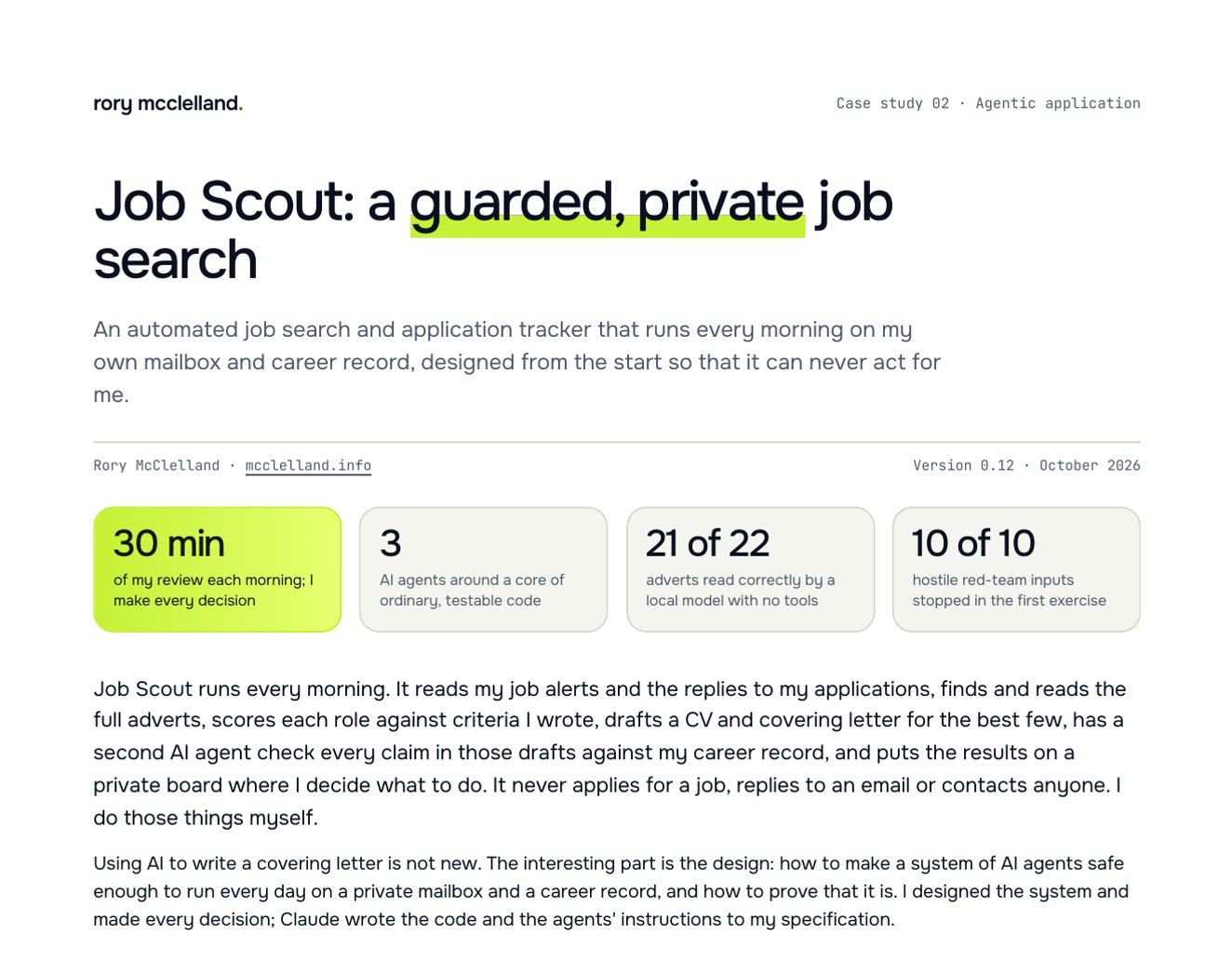
The problem. Job Scout runs a job search every morning on a private mailbox and career record. It reads alerts and adverts, scores each role and drafts a CV and letter for the best few: private data and text written by strangers, in the same system.
The tension. Every useful step adds risk. An agent that could apply, reply or follow up would save the most time, and would also be the most dangerous thing to leave running.
The decision. The never list came first: it never applies, replies or contacts anyone, and every decision stays with the user. Adverts and emails are read on the local PC by a model with no tools and no internet access, and only a checked summary leaves the machine. Claims in each draft are verified against the career record by code. Then it was attacked: all ten hostile red-team inputs were stopped.
Decide what it must never do before deciding what it should do.